How to Claim Ontario's New HST Rebate on Your Dream Home Renovation
If you are dreaming of buying an older property and transforming it into your ultimate dream home—or if you want to completely gut and rebuild your current house—the government has some news for you. Ontario has introduced the Enhanced New Housing Rebate (ENHR). Under this updated program, individuals managing their own home makeovers can get up to $130,000 back on the HST paid for construction, labor, and materials. The catch? It is not for a simple kitchen face-lift. The Canada Revenue Agency (CRA) has strict structural rules and tight deadlines to qualify.
Here is a breakdown of how to turn your major renovation project into a giant tax refund.
What is the Rebate and How Much Do You Get?
When you buy building supplies or hire contractors in Ontario, you pay 13% HST. This program lets you claw back some or all of that back. The rebate consists of two pieces: a refund on the 8% provincial part of the HST (up to $80,000), plus a special 5% federal top-up payment (up to $50,000). Combined, you could get a maximum of $130,000 back in total tax relief. How much you get depends on the final Fair Market Value (FMV) of your completed home and land: Value under $1,000,000: You get a full 100% rebate of the eligible HST you paid. Value between $1,000,000 and $1,500,000: You get a fixed, flat provincial rebate of $80,000 plus the federal top-up. Value between $1,500,000 and $1,850,000: The rebate amount gradually shrinks as the value goes up. Value over $1,850,000: You are completely disqualified from this new enhanced rebate (though you might still qualify for the smaller, legacy rebate capped at $24,000).
The Golden Rule:
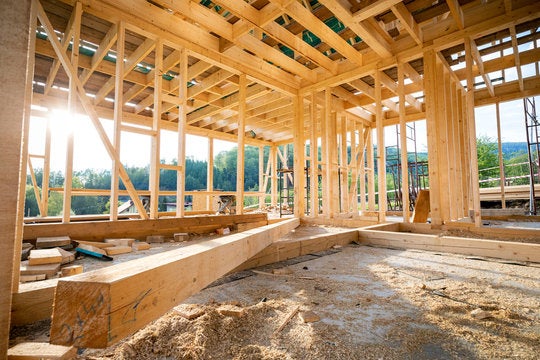
The 90% "Gut" Test To qualify for this rebate, the CRA needs to legally view your project as a "substantial renovation" rather than a regular home improvement. To pass the test, 90% or more of the existing house's interior must be completely removed or replaced. In simple terms: you need to gut the house down to the wooden studs. What you CAN keep: You are allowed to keep the original foundation, exterior walls, roof, and main internal support beams. What counts: The 90% rule only applies to finished, livable spaces (like living rooms, bedrooms, and finished basements). Unfinished garages or crawl spaces do not count toward your math. What about adding an addition? Building a new addition onto an older house only qualifies if you also gut 90% of the old house at the same time, OR if the new addition is so massive that it effectively doubles the total living space of the original home.
Other Must-Meet Conditions
The Project Window: The physical demolition or construction work must have officially started on or after April 1, 2026, and on or before March 31, 2027. The entire project must hit substantial completion by December 31, 2029.
Primary Residence: You (or a close family member) must move into the home as your primary place of residence once it is finished. You cannot claim this rebate if you are building the home to immediately flip it or rent it out to tenants.
Open to Everyone: You do not need to be a first-time homebuyer to qualify. Repeat buyers and downsizers are completely welcome.
How to Collect Your Cash
Because you are managing the project yourself, you will pay the HST upfront to your contractors, tradespeople, and hardware stores. You have to manually claim it back from the government after the fact. Keep Every Receipt: Save every single itemized invoice, building permit, and proof of payment for at least 6 years. Take "before and after" photos of the gut job to prove you met the 90% rule.
Fill out Form GST191: This is the CRA Owner-Built Housing Rebate Application. Make sure to complete the accompanying Ontario Rebate Schedule. Check the Consent Box: Don't forget to sign the "consent to share" section on your application form. This gives the CRA permission to send your data to the Ontario Ministry of Finance, which triggers your extra 5% provincial top-up payment.
Watch the Clock: You must submit your application within two years of the day you first move back into the renovated home, or the day the work is officially complete.
Disclaimer: Tax laws can be highly technical. Before knocking down any walls, make sure to review your floor plans with a qualified accountant or tax professional to ensure your project structurally meets the CRA’s strict definition of a substantial renovation.
Ready to start planning your dream build? Click here to set up a property watch for a lot or a house to renovate and receive instant notifications for properties that fit your project goals.